
How RF PCB Manufacturers Are Different From Rigid PCBs
RF PCB Manufacturers
RF PCBs are made to tolerate a wide range of temperatures, making them an excellent choice for a number of applications. They are also able to handle high voltages and can be easily fabricated. These boards are often found in electronic devices that require a quick signal supply, such as mobile phones and tablets. They can also be used in devices that require a lot of data transfer, such as laptop computers and uninterruptible power supplies.
Rigid PCBs are made from materials like copper, nickel, and glass epoxy. Using a process called laser drilling, they are made from one or more layers of material that are fused together with heat from a laser beam. This is done to ensure the integrity of the board, and it provides a pathway for wiring between components on both sides of the board. After this, the layers are plated with different types of metal, such as gold, silver, or leaded solder.
Once the plating is complete, a photo-imageable mask is applied to the surface of the PCB, which limits the area where solder can be placed. This can be used to protect the surface from damage during the assembly process, and it is an important step in ensuring the quality of a rf pcb manufacturer.
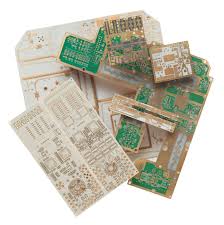
How RF PCB Manufacturers Are Different From Rigid PCBs
A rigid-flex PCB combines the flexibility of flexible printed circuit boards with the strength, stability, and dimensional accuracy of rigid PCBs. These types of circuit boards are used in many applications, including mobile phones and tablet screens, wearables, and robotics. They are also useful in industrial equipment such as automation controls, uninterruptible power supplies, and data centers.
The design of a rigid-flex PCB can be complex, and it is important to work closely with fabricators to make sure the final product meets specifications. This can include ensuring that the rigid-flex design is mechanically reliable and that it is able to endure a large number of bending cycles. It is also important to incorporate design for manufacturability into the design process, as this can help to reduce costs and improve the quality of the finished product.
To begin the fabrication process, a rigid-flex PCB starts as a single or double-sided flex layer. The fab shop may use pre-laminated flex with adhesive or start with unclad PI film. The cladding is then added to the flex layer through a series of chemical processes. The resulting rigid-flex circuit is then drilled, plated, and etched in the same way that rigid PCBs are.
Despite the initial complexity of manufacturing rigid-flex PCBs, they often result in lower assembly costs than rigid-only circuits and cable assemblies. This is because rigid-flex circuits are more space efficient and require fewer connectors, which can increase reliability and decrease the chance of failure due to connector problems. When choosing a rf pcb manufacturer, it is important to choose a company that has experience in designing and building rigid-flex circuits. This will help to avoid costly mistakes that could delay the time-to-market for your project.