
How Are Connectors Integrated Into Flex PCB Manufacturing?
Connectors Integrated Into Flex PCB Manufacturing
When it comes to integrating flexible circuits into electronic devices, the right connectors are essential for ensuring uninterrupted connectivity. Flex PCB connectors can withstand a wide range of environments, from bending and flexing in consumer electronics to withstanding high temperatures and vibrations in automotive and aerospace systems. By enabling compact and efficient circuit layouts in consumer gadgets and withstanding the rigorous design requirements of advanced systems, flex-to-board connectors enable manufacturers to deliver innovative products that meet their customers’ needs while optimizing the performance of their devices.
In order to achieve the required flexibility, a flex PCB consists of multiple layers that are typically laminated together using an epoxy or polyimide adhesive. The outermost insulating PI layer is referred to as the coverlay, and the inner layers are referred to as copper foil layers. Each copper foil layer has a series of openings, called Microvias, that are plated through to make them conductive. The copper traces on the inner PI layers can be arranged in different patterns to achieve specific circuit functions. The Microvias can be staggered or stacked to simulate blind and buried vias in a regular rigid PCB.
The termination method of the connectors is also an important consideration when designing a flex PCB. Some flex pcb manufacturing use a standard soldering process, while others require a more precise surface-mount technology (SMT) assembly. SMT provides superior processing consistency and enables higher yields, resulting in lower cost assemblies.
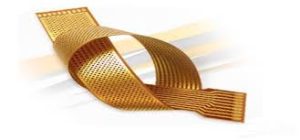
How Are Connectors Integrated Into Flex PCB Manufacturing?
Another crucial aspect to consider is the insertion force of the connectors, as well as their mechanical durability and reliability. Flex PCB connectors can withstand millions of flex cycles, making them highly durable and reliable in applications that require dynamic mechanical stress. Their flexibility also helps reduce mechanical stress, thereby mitigating potential damage to the connectors and extending their lifespan.
PCB flex connectors are increasingly being used to replace traditional wiring harnesses and ribbon connectors, which often consume a significant amount of space in electronic devices. This reduction in footprint translates into improved energy efficiency, increased mobility, and enhanced user experience. It also helps to reduce overall device weight, which is a benefit in applications where weight optimization is crucial, such as electric vehicles and portable consumer electronics.
Flex-to-board connectors can be inserted in a variety of ways, including a snap-on clip, screw, latch, or bayonet-style lock. In addition, they can be provided with polarization and keying features to prevent incorrect insertion and avoid potential damage to the device or connector.
The selection and integration of flex-to-board connectors can be complicated, but manufacturers can provide design engineers with comprehensive technical support throughout the selection and implementation phases. This knowledge can help them optimize the functionality and performance of their flex-to-board connections while ensuring that the resulting assembly meets industry standards for quality, safety, and durability.
Aside from providing extensive technical support, manufacturers can also offer a variety of different types of flex-to-board connectors that are tailored to specific applications. Some of the most common are ZIF connectors, which offer a simple, one-part connector system that requires no connector assembly on the flex circuit and is highly effective for single insertion applications. Other options include a variety of molded inserts, which are available with features like mechanical retention tabs or controlled impedance. In addition, molded insertion connectors can be sculpted to provide terminal finger lengths that are matched to the conductor pitch of the copper traces on the flex circuit.