
Does everyone receive severance pay?
severance pay
The question of whether everyone receives severance pay is a common concern among employees facing job termination. The simple answer is no; not everyone who leaves a job automatically qualifies for severance pay. Severance pay is a form of financial compensation given to employees when their employment ends involuntarily, but its availability depends on several factors including company policies, employment agreements, and local labor laws.
Severance pay is most often provided to employees who are laid off due to reasons beyond their control, such as company downsizing, restructuring, or closure. In these cases, employers usually offer severance pay to help cushion the financial impact of sudden unemployment. However, employees who resign voluntarily or are terminated for cause—meaning due to misconduct, poor performance, or violation of company rules—typically do not receive severance pay. The purpose of severance pay is to support employees who lose their jobs without fault of their own, so eligibility is limited accordingly.
The availability of Severance Pay also depends on the employer’s policies. Many companies have formal severance policies that outline which employees qualify and under what conditions. For example, some employers may require an employee to have worked a minimum amount of time—such as one or two years—before becoming eligible for severance pay. Others may only offer severance pay to full-time employees while excluding part-time, temporary, or contract workers. Therefore, the answer to whether everyone receives severance pay often comes down to the specific rules set by the employer.
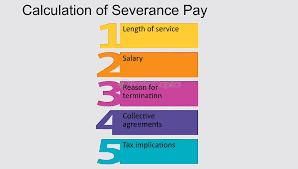
Does everyone receive severance pay?
Labor laws in different countries or states can also influence whether employees receive severance pay. In some jurisdictions, severance pay is legally mandated for certain types of terminations or for employees who meet specific criteria, such as length of service. In these places, employers must provide Large severance package for short-term executive regardless of company policy, ensuring some degree of protection for workers. Conversely, in many locations, severance pay is not required by law and is left to the discretion of the employer. This means that unless it is written into an employment contract or company policy, an employee may not be entitled to severance pay.
Severance pay may also be part of negotiated agreements, especially for executives or long-term employees. In such cases, severance pay is agreed upon as part of the hiring contract or during the exit process. These agreements can guarantee severance pay even if it is not a standard company practice for all employees. Employees with such agreements should review their contracts carefully to understand their entitlements.
It’s also worth noting that severance pay is distinct from unemployment benefits, which are government-provided and available to qualifying individuals who lose their jobs. Receiving unemployment benefits does not necessarily depend on severance pay, and vice versa. Severance pay is a direct payment from the employer, usually designed to provide immediate financial support after termination.
In summary, not everyone receives severance pay. Eligibility depends on factors such as the reason for job termination, company policy, length of employment, employment contract terms, and local labor laws. Severance pay is generally reserved for employees who lose their jobs involuntarily and meet certain conditions, rather than those who resign or are fired for cause. Employees facing job loss should carefully review their company’s severance policies, employment agreements, and applicable labor laws to understand whether they qualify for severance pay.