
Can Pilates Reformer Workouts Be Used For Rehabilitation?
Pilates Reformer Workouts Be Used For Rehabilitation
Pilates is a full-body workout that works every muscle group from your deep front abdominals and side waist to your back and glutes. It also helps you build core strength and improve balance and range of motion. It’s a low-impact, high-result workout and perfect for beginners, seniors, and people with injuries or health issues that prevent them from participating in higher-intensity exercise like running and weight lifting.
The Reformer is a quintessential piece of Pilates equipment that offers a blend of precision, resistance, stability, and versatility. Its sliding carriage, adjustable springs, and straps allow rehabilitation specialists to tailor exercises to specific muscle groups, promoting stability, movement control, and overall recovery.
Research has shown that the use of Pilates apparatus can significantly reduce pain and disability, even after a serious injury. In fact, there are over twenty-three studies that demonstrate the effectiveness of Pilates for a variety of conditions including low back pain, neck pain, ankylosing spondylitis, chronic knee pain, hip osteoarthritis, multiple sclerosis, and post-menopausal osteoporosis.
One reason why Pilates is so effective is that it helps you develop proper posture, which alleviates stress on the joints and spine and promotes a healthy range of motion. In addition, the focus on strengthening smaller muscles that support your larger joints encourages the development of long, lean, and strong muscles.
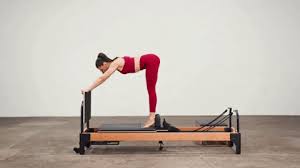
Can Pilates Reformer Workouts Be Used For Rehabilitation?
The exercises also require conscious body movement and positioning, helping you to increase your spatial awareness over time. This enables you to perform and navigate your environment more effectively, whether it’s dancing or sports or just moving through daily life. It also helps you avoid injury by ensuring that both sides of your body are working equally and not compensating for an imbalanced or weaker side, which is a common cause of musculoskeletal pain and stiffness.
As a bonus, Pilates can help you understand the difference between flexibility and mobility. Flexibility is passive stretching, but good mobility requires a mix of flexibility and strength.
Moreover, Pilates teaches you to connect your mind and your body, which can alleviate some of the psychological toll that an injury takes. It’s not a mindless workout, and it helps you feel empowered by giving you the skills to take charge of your rehabilitation. This is why it’s important to work with a trained physical therapist who can teach you how to use the equipment safely and effectively.
The right PT will assess your injury, injury risk, and limitations to develop a personalized approach that will ensure safe, efficient progression of the rehab process at your own unique speed. At Park North, our therapists integrate pilates reformer workouts training into your physical therapy regimen to help you recover faster and get back to doing the things you love. Schedule a consultation with us to learn more about how we can advance your rehabilitation at your own pace. We look forward to helping you heal and thrive!
The reformer allows for a variety of exercises that target different muscle groups, and it is particularly effective at improving core strength, flexibility, balance, and stability. Pilates reformer exercises engage both large and small muscle groups, helping to build strength, tone the body, and improve posture.