
Benefits of Staking Pins in Rigid Flex PCBs
Staking Pins in Rigid Flex PCBs
Rigid flex PCBs are being used in commercial and industrial applications to improve the performance of products by providing thermal stability, increasing reliability, simplifying assembly, and reducing costs. They also offer superior mechanical flexibility and EMI control. Among many other advantages, they are more aesthetically appealing than traditional rigid printed circuit boards, which can be an important consideration when the final product will be placed in a visible location.
In addition, the use of rigid-flex allows you to eliminate additional connectors and wire assemblies that would otherwise be needed to interconnect each printed circuit board. This streamlines the manufacturing process, reduces assembly time, and makes it easy to automate testing of the final product. Moreover, rigid-flex printed circuit boards can be used in a variety of enclosures, including handheld devices, medical and aerospace systems, and vehicle infotainment.
Using rigid-flex PCBs can also save you money on production and shipping costs, as well as reduce the weight of your finished product. This is because flex PCBs are made with ultra-thin substrates, typically polyester or polyimide. They can have as few as 12-120 microns of conductive material. This ultra-thin thickness allows for much greater connection density, and significantly lowers overall package size and weight.
The flexible sections of a rigid-flex pcb are typically surrounded by a layer of copper, which is then etched to provide the necessary conductivity. However, it is important to note that the choice of the flexible section’s bend radius can impact signal integrity and mechanical reliability. A bend radius that is too small can lead to mechanical failure and impedance mismatches. A rigid-flex PCB must also be designed to incorporate the appropriate thermal expansion characteristics of both the rigid and flexible sections.
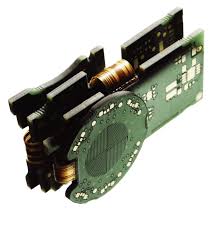
Benefits of Staking Pins in Rigid Flex PCBs
Another benefit of rigid-flex PCBs is their ability to withstand a variety of environmental conditions. Rigid flex is often built to comply with IP ratings and other industry standards, making it ideal for a wide range of applications in the consumer, automotive, medical, construction, and energy industries. They can be manufactured with a variety of materials and layouts to meet customer specifications, and they can be robustly constructed to withstand harsh environments such as vibrations and shock.
Rigid-flex circuit boards are a great solution for complex applications that require both the durability of rigid boards and the flexibility of flex PCBs. They are suitable for a wide range of environments and are available in a wide variety of sizes, shapes, and colors. Additionally, they can be drilled, cut, and routed to accommodate different mounting and assembly configurations. In addition, they can be joined with a soldering method that utilizes pads on both the rigid and flex circuits to make a 1-to-1 connection. This method is simple and fast, and it can be used in conjunction with other soldering techniques to create a more resilient connection. However, you should be aware that this method is not as strong as soldering directly to the pads on both the rigid and flex circuits.
Furthermore, stencils contribute to the overall efficiency of the assembly process. By facilitating precise and controlled deposition of solder paste and other materials, stencils help minimize waste and rework, reducing production costs and turnaround times. Their role in ensuring consistent quality also helps to enhance the reliability and durability of the final PCB assemblies, meeting the stringent requirements of various applications across industries.